BLUE EXHIBITION
The Blue Exhibition i
The Blue Exhibition is a sound, light and video installation which explores semiotics, visual and sonic codes of public communication and engagements in relation to the context it exists in: Johannesburg, South Africa. In exploring signs and symbols and the value of images and sound, The Blue Exhibition attempts to disrupt the contemporary hierarchy of meaning by exploring a new or alternative set of meanings through sound and visuals. This speaks to the idea of an
unfixed and ever evolving meaning in images and the volatile nature of representation and the role technology plays in the re-presentation and reproduction of images, meaning and value. Blue is not the concept but an accessible entry point into exploring the conversation about language and our relationships to visual and sonic codes. It is a simple way of talking about associations, what they mean to us and how they may change.
The first iteration of The Blue Exhibition in 2017 was at a trendsetting club and exhibition space called Glory.
The Blue Exhibition ii
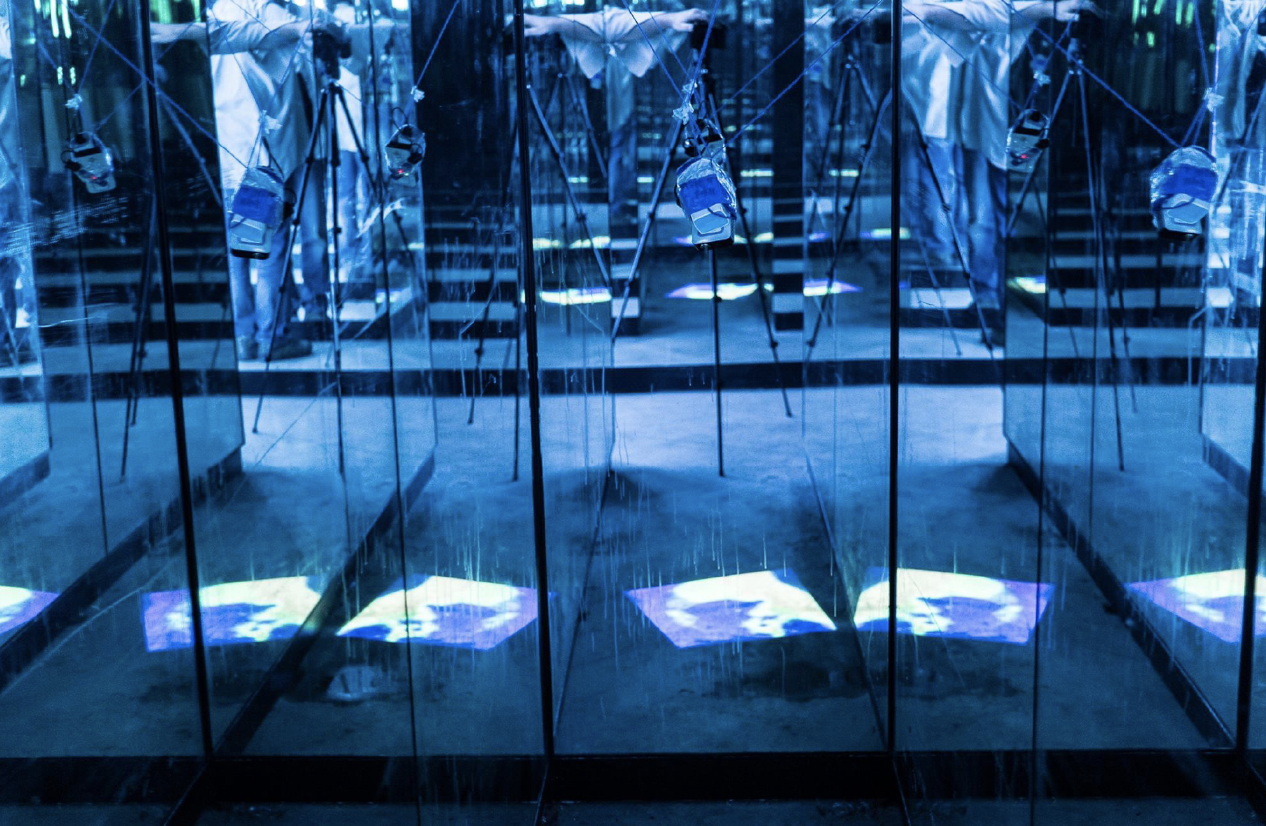
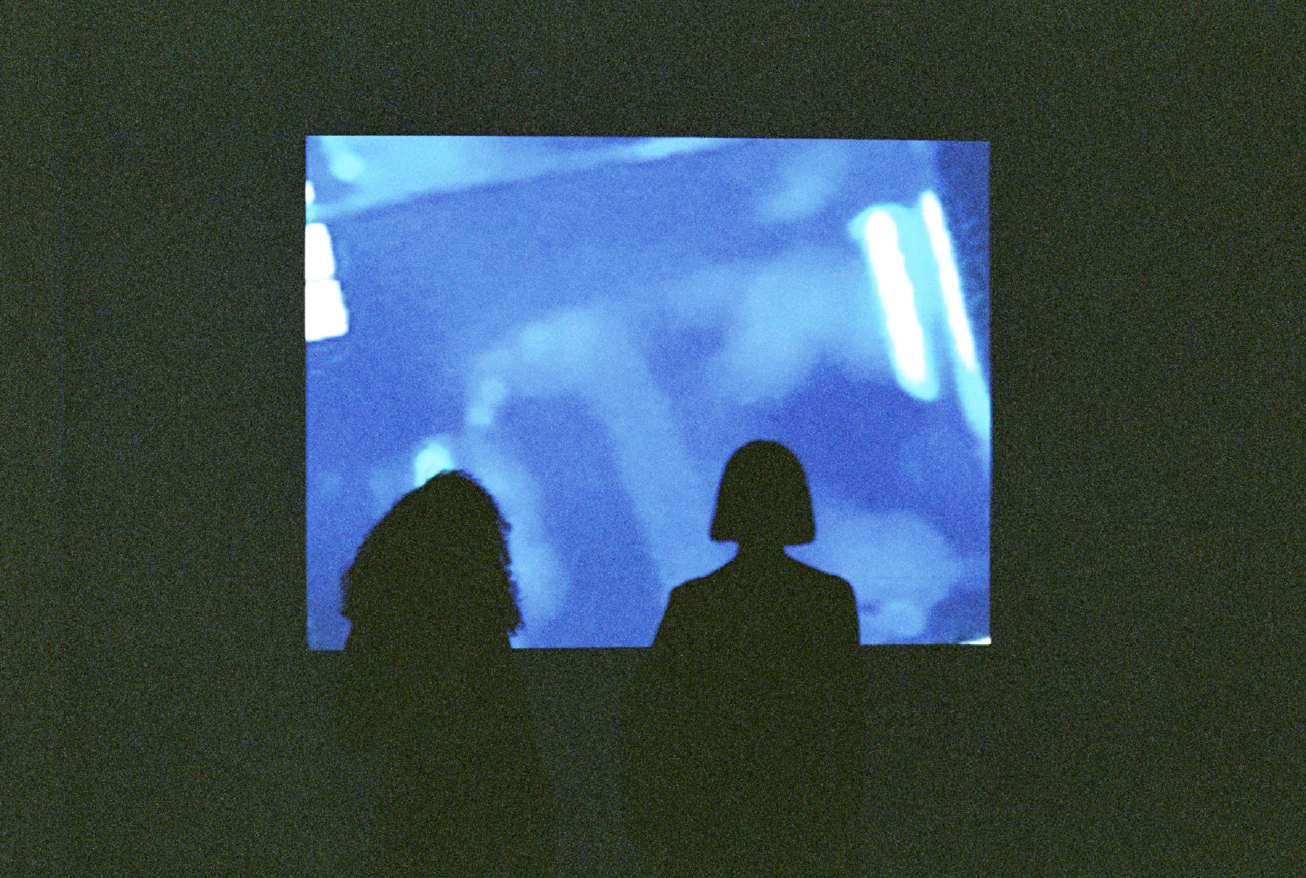
The second iteration of The Blue Exhibition took place at the Fak’ugesi, African Innovation Festival in Braamfontein, Johannesburg. This was a digital arts and music festival of which The Blue Exhibition occupied the first floor of the Shine Studios building. Five projections were projected into five 3 meter square windows viewable from both inside and out. This allowed people to view the work from two different spatial contexts, inside accompanied by our soundscapes and the outside accompanied by the sounds of the city.
![]()
![]()
![]()
The Blue Exhibition iii
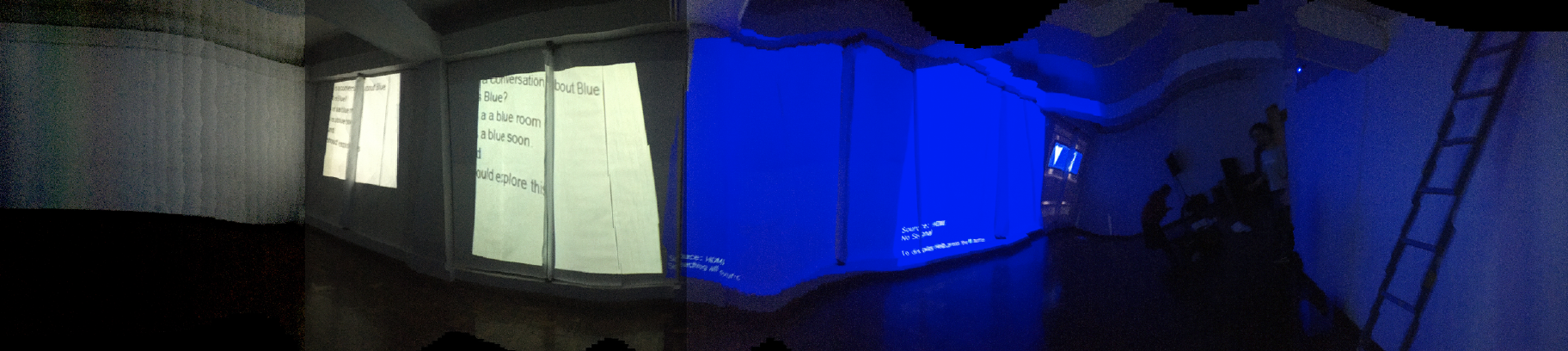
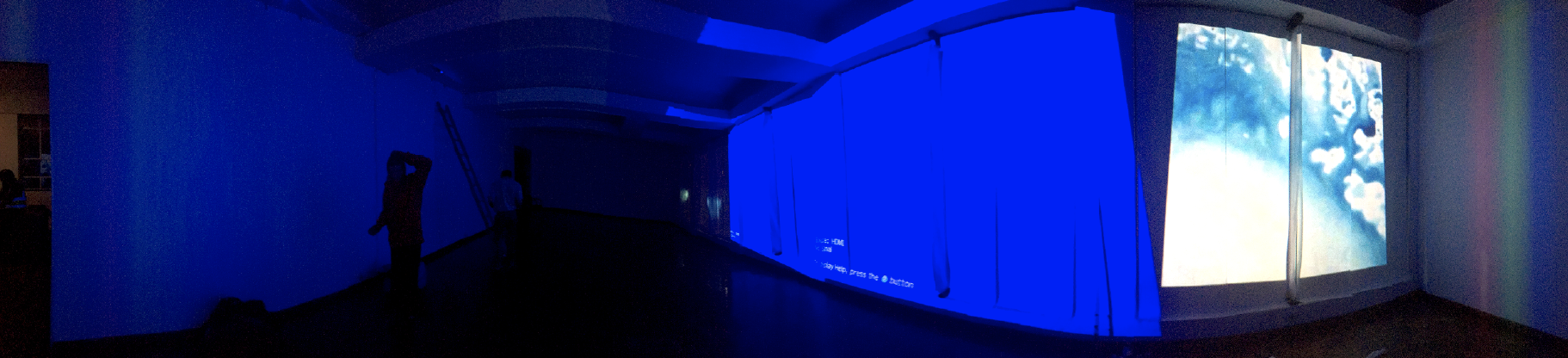
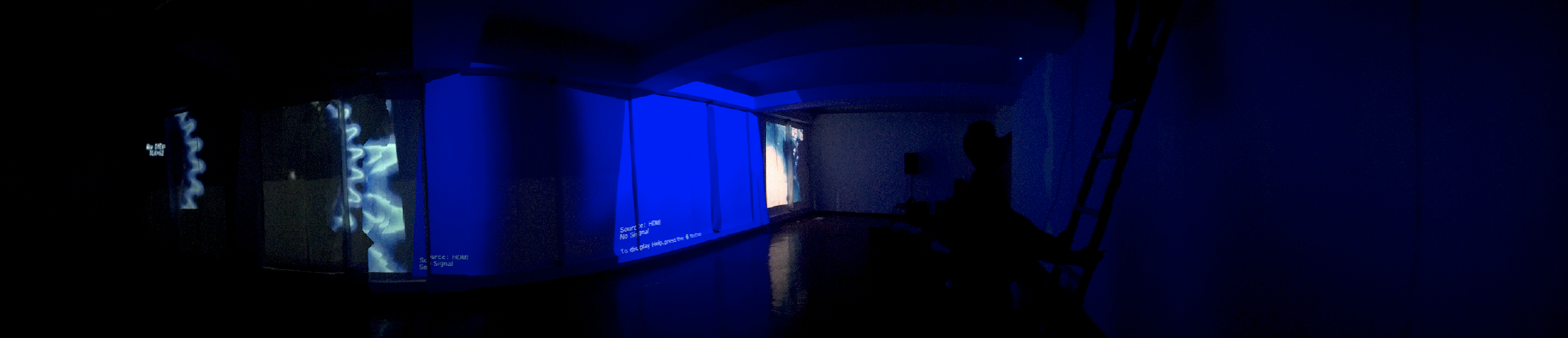
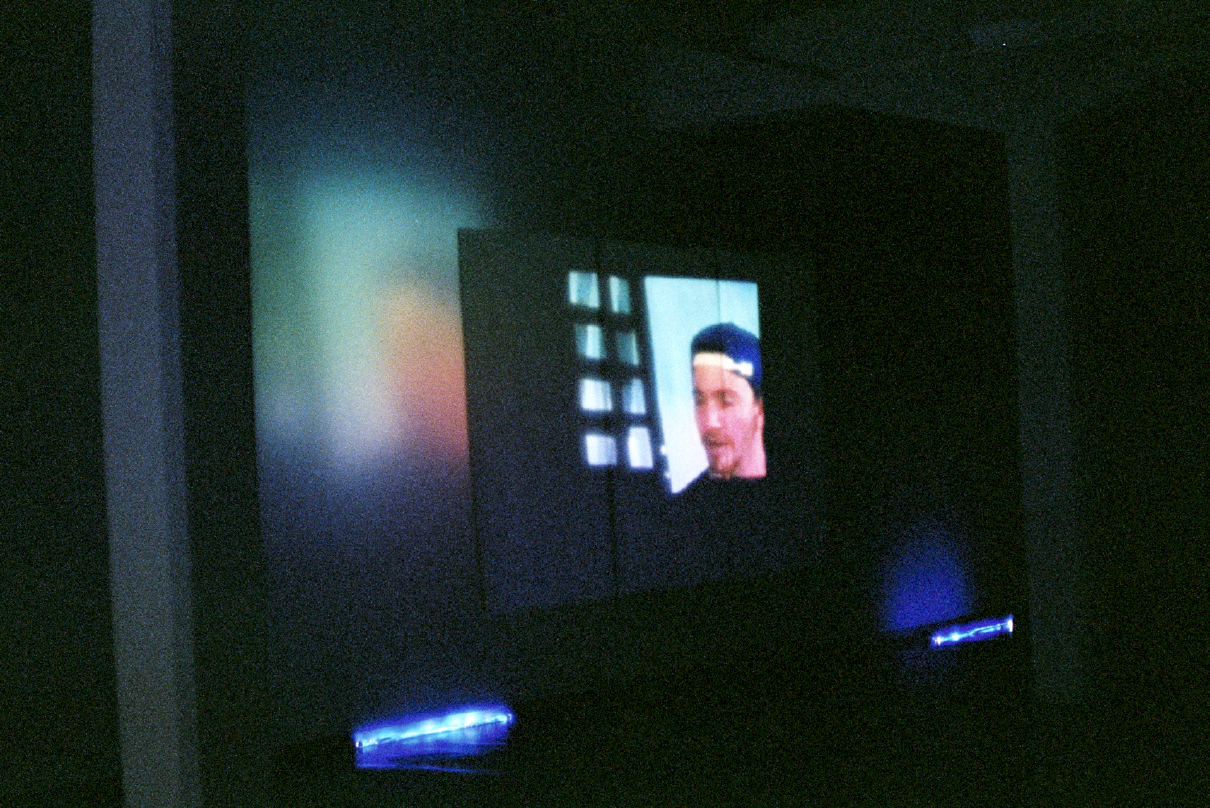
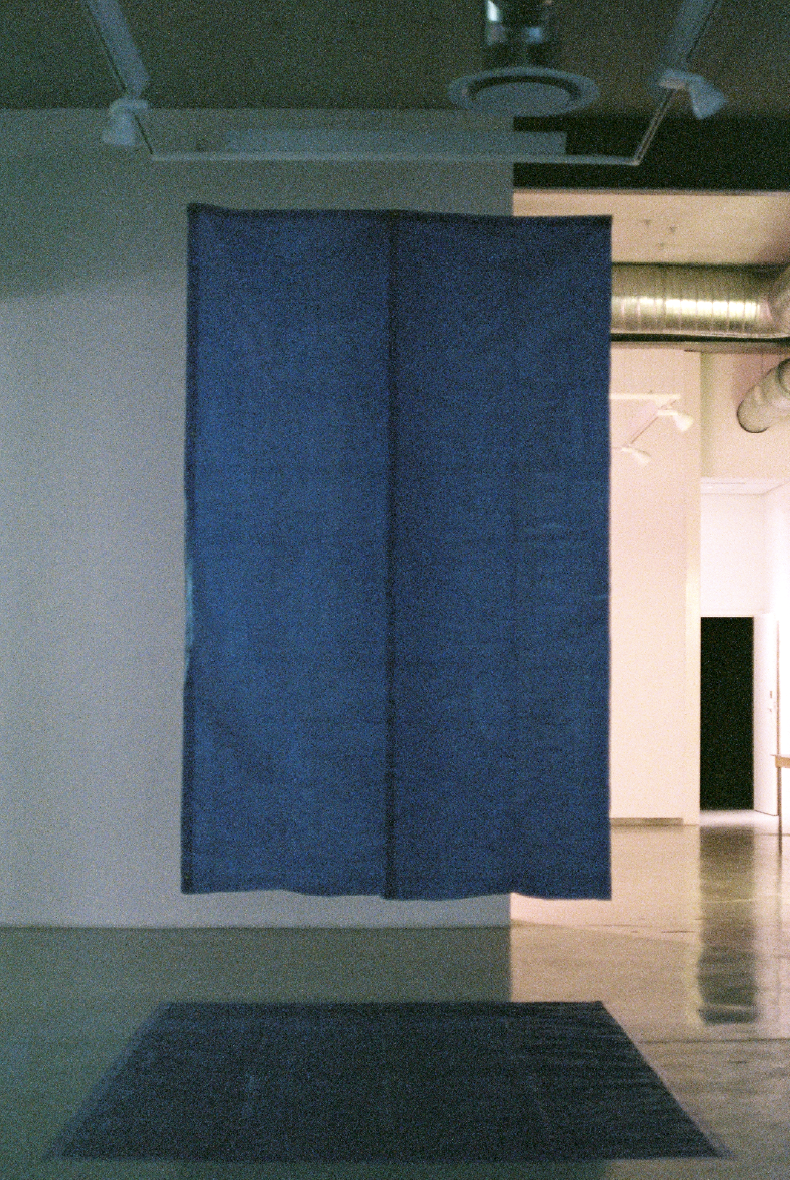
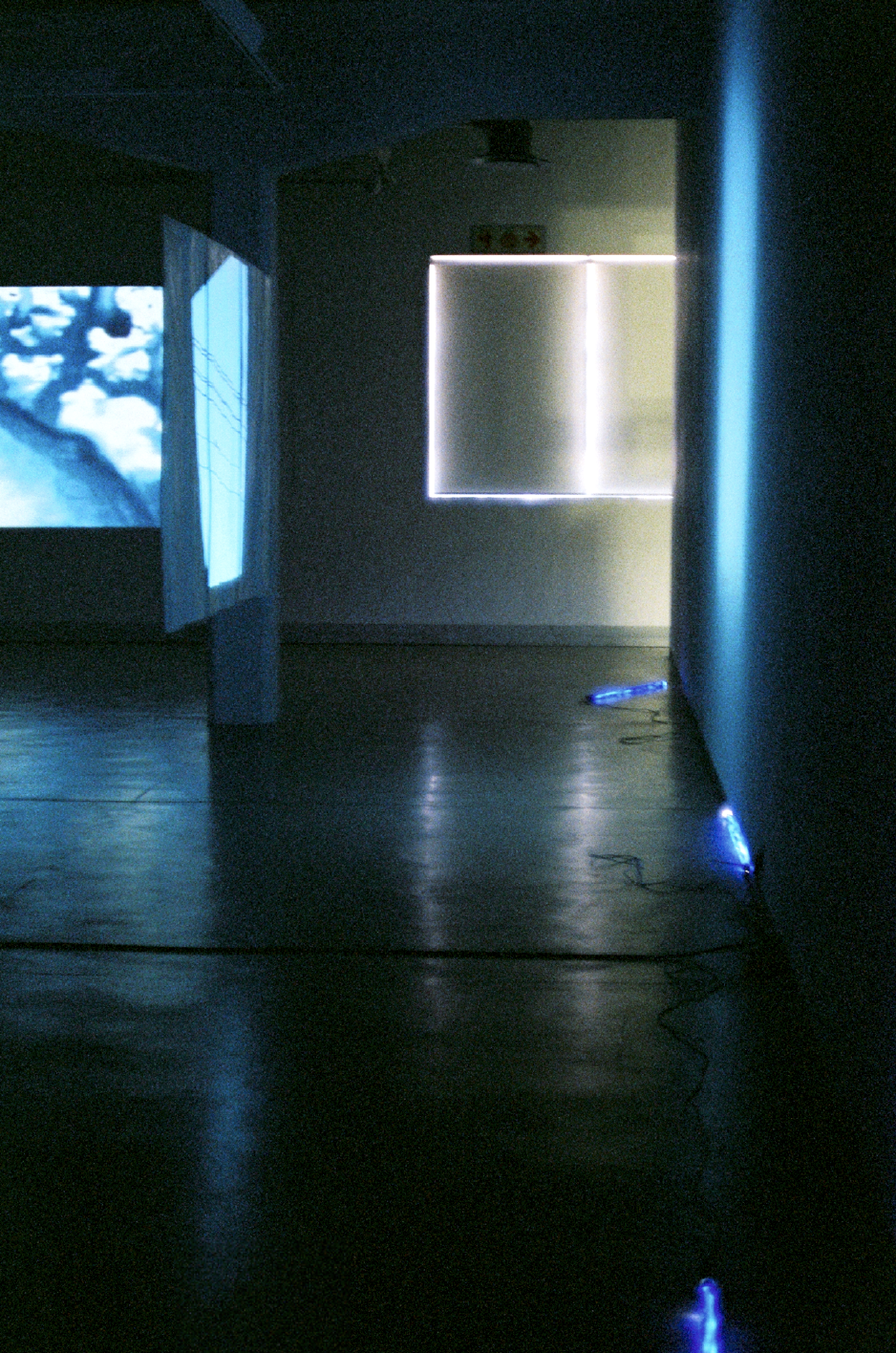
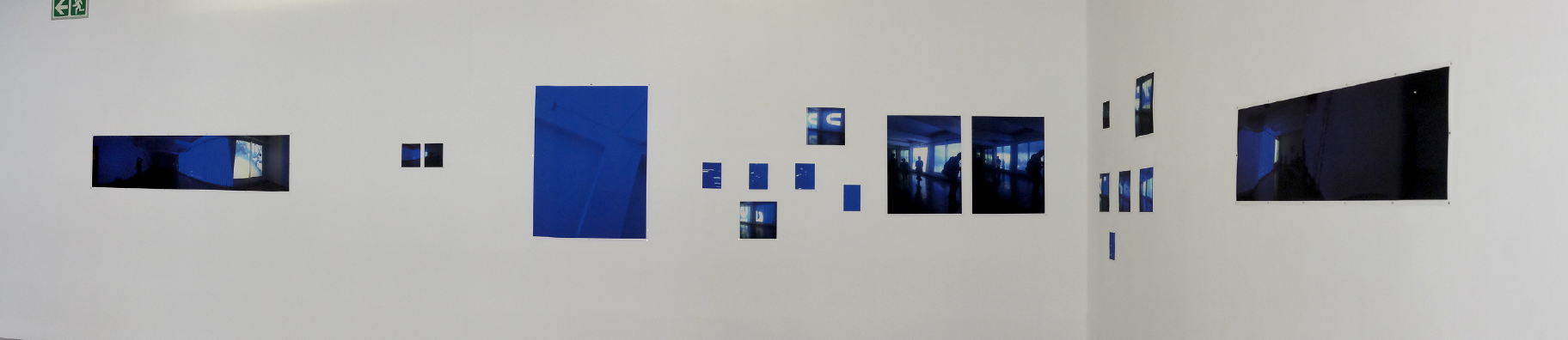
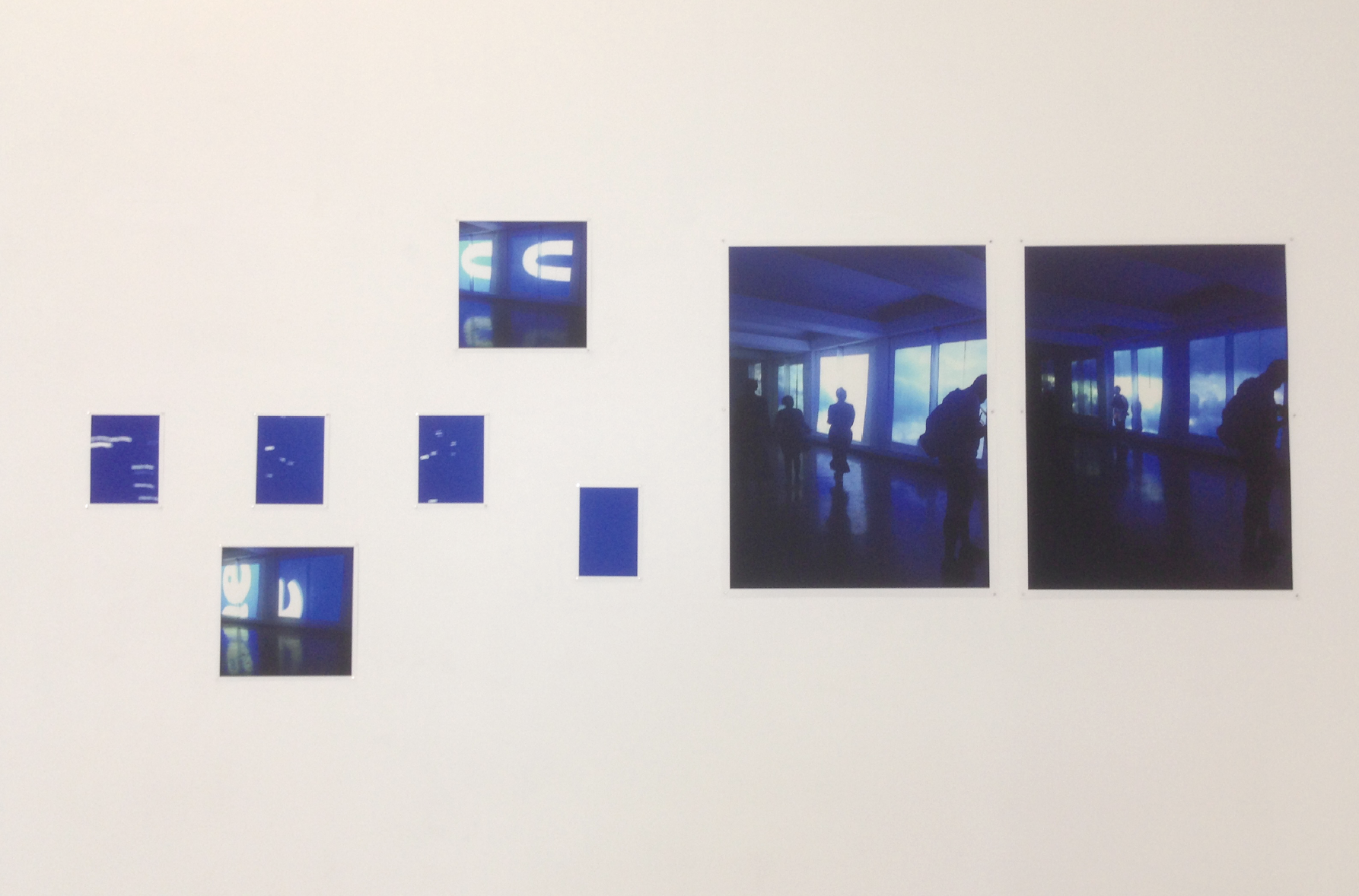
The third and the most recent exhibition took place at Gallery MoMo, Cape Town. The exhibition occupied the entire space, being three rooms and a video room.The first room consisted of a new addition to the exhibition: A series of documentative and abstracted photographs of the previous exhibition at Fak’ugesi. The second room consisted of two large projections along with soundscapes that could be heard throughout the entire space. In addition, blue tarpaulin hung from the ceiling, interrupting the space. The third room consisted of two more projections, one of which was projected onto suspended butchers paper central to the space. Blue tube lights were placed along the floor. The video room consisted of a double projection along with the soundscapes which allowed for a more intimate experience of the visuals and sound.
![]()
Portraits
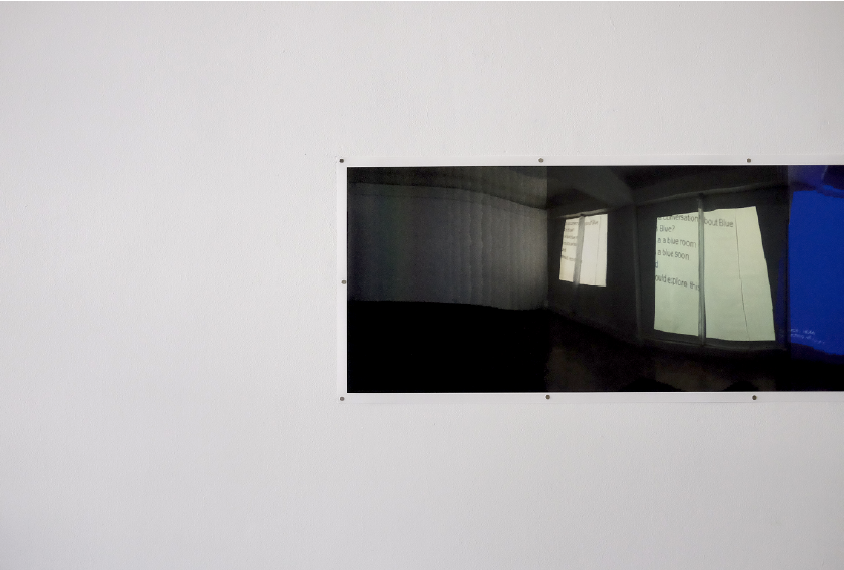
The latest iteration of The Blue Exhibition included a photographic aspect titled, “Portraits”. This series of photographs depicted a previous iteration of the exhibition as the subject, some of the photographs of which were abstracted and distorted in the format of a panorama, which in a sense presented the exhibition representatively, and some of which were more documentative in nature.
The function of these images to the subject (being the past, present and continuing exhibitions) was to both document the past and stand as its own artistic entity in the present and future, similarly to that of more conventional portraits. In a similar way to which the self portrait is self referential, The Blue Exhibition Portraits are self referential too. By the traditional conventions of portraiture, The Blue Exhibition Portraits would not be considered portraits mainly due to the nature of the subject which overturns most traditional conventions of subjectivity, reference and representation which as said before is focused around the human, and references the existence/presence thereof, and is done so through mimetic representation. However, in the light of the modern conceptions of portraiture, The Blue Exhibition Portraits could be argued to fit and uphold new conventions, or anti-conventions, of the portraits genre particularly in its similarity regarding reference and representation.
Firstly, in the true spirit of modern portraiture, The Blue Exhibition Portraits do not capture the essence of The Blue Exhibition, instead they only depict an aspect or remnant of it, which leads me to the next point of similarity, which is the elusive nature of the subject. The Blue Exhibition Portraits refer not to the presence and fixed nature of the exhibition, but to the past, or better yet, the changing nature of the exhibition and therefore the changing nature of the meaning. It is because The Blue Exhibition Portraits exist as objects of current exhibitions as well documentations or signifiers/icons of past exhibitions that they represent both iconographically and indexically and therefore reference change. The portraits reference a past iteration (a sort of absence), but it is because they exist in the context of a current and new configuration that the comparison between the two is possible and the change and continuity is realised. Much like the case of Boltanski’s re-presented photographs, the subject referred to in The Blue Exhibition Portraits does not correspond with its current reality, which decentralises the importance of “presence” in the portrait and foregrounds the unfixed nature of the subject. (Van Alphen, 1997: 248) Furthermore, uniqueness of the subject is not “captured” in The Blue Exhibition Portraits, but rather realised in comparison to the context of the current exhibition it is based in. Lastly, by the mere fact that these are photographic portraits, they deny the traditional idea of the portrayers subjective originality and as of consequence, the authenticity of the subject, but in the same breath argue the possibility of artistic interference in photography (and technology at large) in the sense that the some of The Blue Exhibition Portraits have been purposefully distorted and push the limits of digital photography which contrasts the idea that photography simply refers. This speaks to the change in form and nature of representation in modern conceptions of portraiture.
![]()